Trademark Registration Consultants, Delhi
Trademark registration in Delhi
Whether you run a clothing label in Karol Bagh, a restaurant chain in Rajouri Garden, a SaaS startup out of an Okhla co-working space, or a consulting firm near Connaught Place, our attorneys manage trademark search, class selection, TM-A filing, objection reply, hearing representation, opposition defence and renewal — so your brand name is legally yours before someone else claims it.
Page content reviewed and updated on September 17, 2026.
The basics
Understanding trademark registration
Trademark registration protects a brand name, logo, tagline, or a combination of these under the Trade Marks Act, 1999, administered by the Office of the Controller General of Patents, Designs & Trade Marks (CGPDTM), commonly known as IP India. There is no separate "Delhi trademark law" — every application, from Delhi or anywhere else, goes through the same national Trade Marks Registry, forms and fee structure. What "Delhi trademark registration" really means in practice is local access to search, filing and hearing support from a consultant who knows the process end to end.
What is trademark registration?
Legal ownership of a brand name, logo or slogan for the specific goods or services you register it under, granted through examination and — where challenged — a hearing or opposition proceeding before the Trade Marks Registry. It's earned through a search, a correctly classified application and (if no objection or opposition succeeds) a certificate, not simply a form you submit once.
Who can apply?
Any person or entity that owns or intends to use a mark in trade — individuals and sole proprietors, partnership firms and LLPs, private and public limited companies, DPIIT-recognised startups, Udyam-registered MSMEs, and trusts or societies. You don't need to already be trading under the mark: Indian law allows "proposed to be used" applications, common for new brands still finalising their launch.
Trademark search & availability check
A trademark search is the single most important step before filing, and the one most Delhi businesses rush through. Checking only the exact spelling isn't enough — the Registry and courts also weigh phonetic similarity (sounds alike), visual similarity (similar logo layout or lettering) and conceptual similarity (same idea, different spelling). A preliminary search reduces risk but doesn't guarantee registration; the Registry runs its own independent examination after filing.
Choosing the right class
Trademark classes and choosing the right one
India follows the international Nice Classification system, grouping all goods and services into 45 classes — 1 to 34 for goods and 35 to 45 for services. Your application must specify the class(es) that match what you actually sell or offer; a single business often needs more than one.
For Delhi's fashion, apparel and headgear brands.
For Delhi's food service and hospitality businesses.
For personal care and beauty product brands.
Falls under Class 9 (goods) or 42 (services), depending on delivery.
Common among Delhi's ed-tech and institute businesses.
Business consulting, advertising and trading services.
Packaged snacks, processed foods and beverages.
For manufacturing and industrial goods businesses.
Combine multiple classes — for example a food brand selling packaged snacks (29/30) that also runs cafes (43) — under one consistent filing strategy.
What we handle
Trademark registration services in Delhi
One dedicated attorney manages every stage of your brand's legal life in Delhi — from the very first search to defending a mark you've owned for years — so nothing falls between departments or gets lost between consultants.
Trademark registration
Trademark search, class selection, TM-A application filing, examination and application tracking through IP India.
Trademark objection reply
Examination report analysis, objection response, legal submissions and supporting documents to answer the Registry properly.
Trademark hearing
Hearing preparation, written submissions, supporting evidence and representation before the Trade Marks Registry.
Trademark renewal
Renewal applications, filing requirements, deadline tracking and documentation so your registered mark stays active.
Trademark opposition
Notice of opposition, counter-statements, evidence and related submissions before the Trade Marks Registry.
Trademark assignment
Ownership-transfer agreements, supporting documents and recordal filings to update ownership records correctly.
International trademark
Madrid System applications, designated countries and documentation for brands expanding beyond India.
Well-known trademark
Applications and evidence of reputation for marks recognised by a substantial section of the public.
The case for registration
Why Delhi businesses need trademark registration
Gives you exclusive, legally enforceable rights over your brand name and logo across India — not just in Delhi.
A company registration certificate or a live website does not stop someone else from using your name; only a registered trademark does.
Lets you use the ® symbol and take legal action against infringement or confusingly similar marks.
Builds customer trust — a registered brand is taken more seriously by clients, partners and investors.
Adds long-term, transferable value to your business as an intangible asset.
Opens the door to franchising, licensing and export markets that expect a registered brand.
Can be extended internationally through the Madrid Protocol once your Indian application or registration is in place.
The outcomes
Benefits of registering your trademark
A trademark isn't just a certificate to frame — it changes what you can legally do if someone copies your name, and how clients and investors assess your brand.
Exclusive rights
Legal ownership of your brand name for the goods/services you register.
Legal protection
Sue for infringement once your mark is registered.
Brand trust
Customers trust a registered, ® brand more than an unregistered one.
Business asset
A trademark is an intangible asset that adds resale and licensing value.
Stops copycats
Prevents others from using an identical or deceptively similar mark.
Global recognition
Can be extended internationally via the Madrid Protocol.
Tender-ready
Some vendor and tender processes prefer or require a registered brand.
Peace of mind
One less thing to worry about as the brand grows and gets copied.
Step by step
How to register a trademark in Delhi
Registration follows a fixed sequence, from search to certificate — with a few conditional stages if an objection or opposition comes up.
Trademark search
Search the IP India database for identical or similar existing marks in your class.
Select the trademark class
Identify the correct Nice Classification class(es) for your goods or services.
Prepare applicant & mark details
Finalise the exact wordmark, logo file, applicant name and address.
Prepare documents
Identity proof, business proof, logo representation and Udyam/DPIIT certificate if claiming a fee concession.
File Form TM-A
Submit through the IP India e-filing portal with the prescribed government fee.
Receive application number
Generated immediately, used to track status on the IP India portal.
Examination
A Registry examiner reviews for conflicts and legal compliance, then issues an examination report.
Respond to objection (if raised)
A written reply must be filed within the prescribed period, addressing the specific grounds raised.
Show-cause hearing (if scheduled)
If unresolved on paper, the Registry may hear arguments from the applicant or representative.
Publication in the Trade Marks Journal
Once accepted, published for public scrutiny for a four-month opposition window.
Opposition proceedings (if filed)
A third-party notice of opposition proceeds through evidence and hearing stages before the Registrar.
Registration, certificate & renewal
Certificate issued if unopposed or won; valid 10 years, then renewable.
Before you start
Documents required for trademark registration
Exact requirements vary slightly by applicant type, but most Delhi applicants — individuals, LLPs, private limited companies and startups alike — need the following before filing can begin.
Straightforward pricing
Choose how you'd like to get started
The final trademark registration cost in Delhi depends on applicant type, number of classes and whether an objection or opposition arises — every plan starts with a free conversation, with no hidden charges added later.
Free Trademark Search
- 20-minute call with a trademark attorney
- Availability check for your brand name
- Class recommendation and cost estimate
Basic Trademark Filing
- Govt. fee (₹4,500) + filing charges (₹999) included
- Search, class selection and TM-A filing
- Good fit for individuals, startups and MSMEs
Premium Trademark Package
- Govt. fee (₹4,500) included
- Objection reply + hearing included (₹3,000 value)
- Full support through to registration
Timelines
How long does trademark registration take?
There's no fixed, guaranteed number of days. A straightforward application with no objection and no opposition moves faster than one that faces either — treat any fixed-day promise with caution.
Search & filing
Trademark search, class selection and Form TM-A submitted with fee.
Examination
Examiner reviews for conflicts and compliance, issues a report.
Objection reply & hearing
Only if the examiner raises an issue in the examination report.
Publication & opposition
Published in the Trade Marks Journal; third parties may oppose.
Registration & certificate
Certificate issued if unopposed, or opposition is decided in your favour.
Total: usually 4 to 12 months for an uncontested mark; longer if objection or opposition arises.
Work from anywhere
Online trademark registration in Delhi
Trademark applications are filed online through the IP India e-filing portal using Form TM-A, regardless of where in India the applicant is based. Filing online is faster to submit and generates an immediate application number, but it doesn't change the legal examination process or guarantee approval. Our team gives a business anywhere in Delhi and NCR the same search, filing, objection-reply and status-tracking experience remotely — a hearing, if scheduled, is generally the only stage that may need representation in person.
Search and classification done remotely with an attorney, over call or WhatsApp.
Documents shared digitally (scans/PDFs) rather than physically submitted.
The application filed electronically on the IP India portal.
Status tracking and objection/opposition replies also handled through the online system.
Learn from others
Common mistakes Delhi businesses make
Filing without doing a proper trademark search first.
Choosing the wrong Nice Classification class for their actual goods or services.
Picking a purely generic or descriptive name without understanding the objection risk.
Writing an inaccurate or overly broad goods/services description.
Ignoring the examination report and missing the reply deadline.
Assuming Private Limited or LLP registration already protects the brand name.
Assuming owning the domain name equals trademark protection.
Using the ® symbol before the mark is actually registered.
Don't confuse the three
Trademark registration vs company name vs domain registration
These are three separate registrations issued by three different authorities, and none substitutes for the others — a mistake we still see growing Delhi businesses make.
Trademark Registration
Grants exclusive, nationwide, enforceable rights to a brand name or logo for specific goods or services.
IP India / Trade Marks RegistryCompany Name Registration
Reserves your company name for incorporation — it does not stop others from using a similar brand.
Ministry of Corporate AffairsDomain Registration
Your website address on the internet — owning it says nothing about brand protection.
Domain registrarOur approach
Why choose LegalStartup for trademark registration in Delhi?
One dedicated attorney
The person who runs your search takes you through filing, objection reply, hearing and certificate — not a rotating call centre.
Search that goes beyond spelling
We check phonetic, visual and conceptual similarity, not just an exact-match lookup, before you file.
Transparent pricing
No hidden charges — from ₹5,500+GST for basic filing to ₹7,500+GST with objection reply and hearing included, before filing begins.
In-house hearing representation
Objection replies, show-cause hearings and opposition matters handled by attorneys who appear before the Registry regularly.
Support beyond the certificate
We track your 10-year renewal date and monitor for similar marks filed by others, so your rights never lapse unnoticed.
Questions
Frequently asked questions
It's the process of legally protecting a brand name, logo or slogan by filing with the Indian Trademark Registry (IP India). Delhi-based applicants can complete the search, filing, examination response and tracking entirely online, with local consultant support for documentation and hearings.
Start with a trademark search, select the correct Nice Classification class, and file Form TM-A through the IP India portal with the prescribed fee. The application is examined, published in the Trade Marks Journal, and registered if no objection or opposition succeeds.
No — every Indian application goes through the same national Trade Marks Registry and process. A regional Registry office in Delhi handles filings connected to Delhi's jurisdiction, but the law and forms are uniform across India.
The government fee is typically ₹4,500 per class for individuals, startups and small enterprises, and ₹9,000 per class for other applicants. LegalStartup's packages start at ₹5,500+GST for basic filing and ₹7,500+GST including objection reply and hearing support.
There's no fixed guaranteed timeline. An uncontested application can register faster; publication alone carries a four-month opposition window, so objections or oppositions extend the process.
Identity and address proof, business registration documents (GST, incorporation or partnership deed, Udyam/DPIIT certificate if applicable), a clear logo or wordmark, and a signed Power of Attorney (Form TM-48).
An objection is raised internally by the examiner during examination. An opposition is filed by a third party after publication in the Trade Marks Journal. Objections need a written reply and sometimes a hearing; oppositions involve a counter-statement, evidence and a hearing before the Registrar.
Yes — Indian law allows "proposed to be used" applications, common for new brands and startups that haven't launched yet.
10 years from the date of registration, renewable indefinitely in further 10-year terms if renewal is filed on time.
No. A company name (MCA) and a domain name (registrar) are separate registrations that don't stop others from using a similar brand in the market. Only a registered trademark gives you enforceable nationwide rights.
Yes, via the Madrid System through IP India, based on an existing Indian application or registration — each designated country applies its own examination and fees.
Yes. Search, documentation, filing and status tracking can be completed entirely online for businesses anywhere in Delhi and NCR; hearings, if scheduled, are generally attended by your representative.
Client experience
What our clients say
"We weren't sure which class our SaaS product fell under. One call and it was sorted, filed correctly the first time."

"Our objection reply was drafted and filed within days, and the hearing went through without further delay."
"They handled our entire filing remotely — our restaurant in Rajouri Garden never had to pause operations."
"Pricing was clear from day one — no surprise charges once the objection stage started."
"The search caught a phonetically similar mark we hadn't noticed — saved us from a costly rebrand later."
"Our opposition matter felt overwhelming until our attorney broke it into clear, manageable steps."
"Renewal reminders meant our trademark never lapsed, even with our team's packed schedule."
"International filing under Madrid felt complicated, but they mapped out each designated country clearly."
Trusted by
Businesses that registered with us





Behind every registration
Meet the trademark attorney team
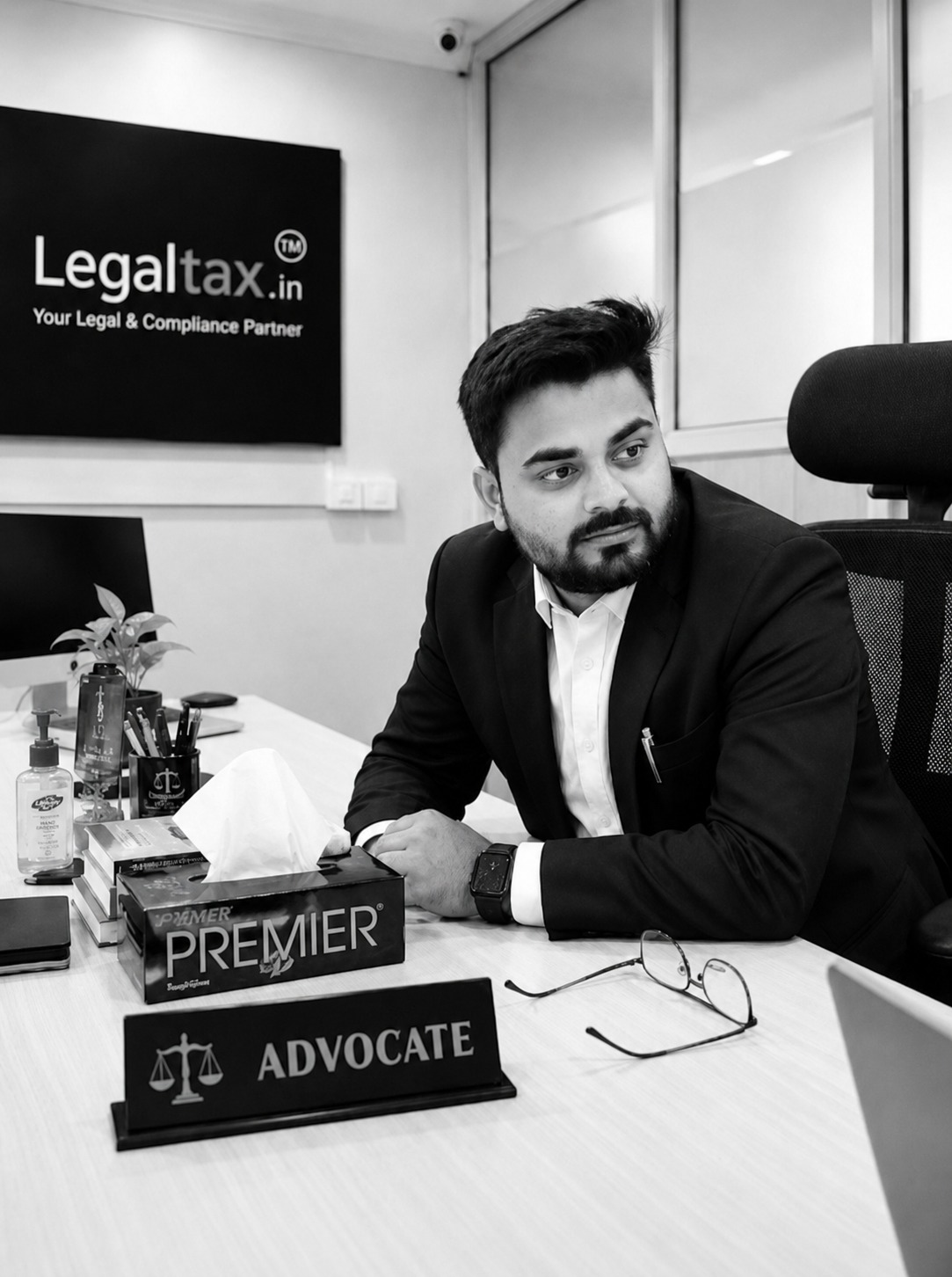
Subhas Chandra Bose
Senior Advocate
Manish Kashyap
Senior Advocate
Radhika
Documentation Specialist
Ankit Gupta
Client Relations ManagerService area
Where we provide trademark registration support
Search, documentation and filing are handled online end to end, so location within Delhi never slows a case down.
Disclaimer: This page provides general information about trademark registration in Delhi and does not constitute legal advice. Government fees, timelines and procedures are subject to change by official notification — always verify current details on the IP India website before filing. For advice specific to your situation, consult a qualified trademark professional.